
Why Does a Property Have More Than One Title Number?
Written by Editorial Team · Last reviewed
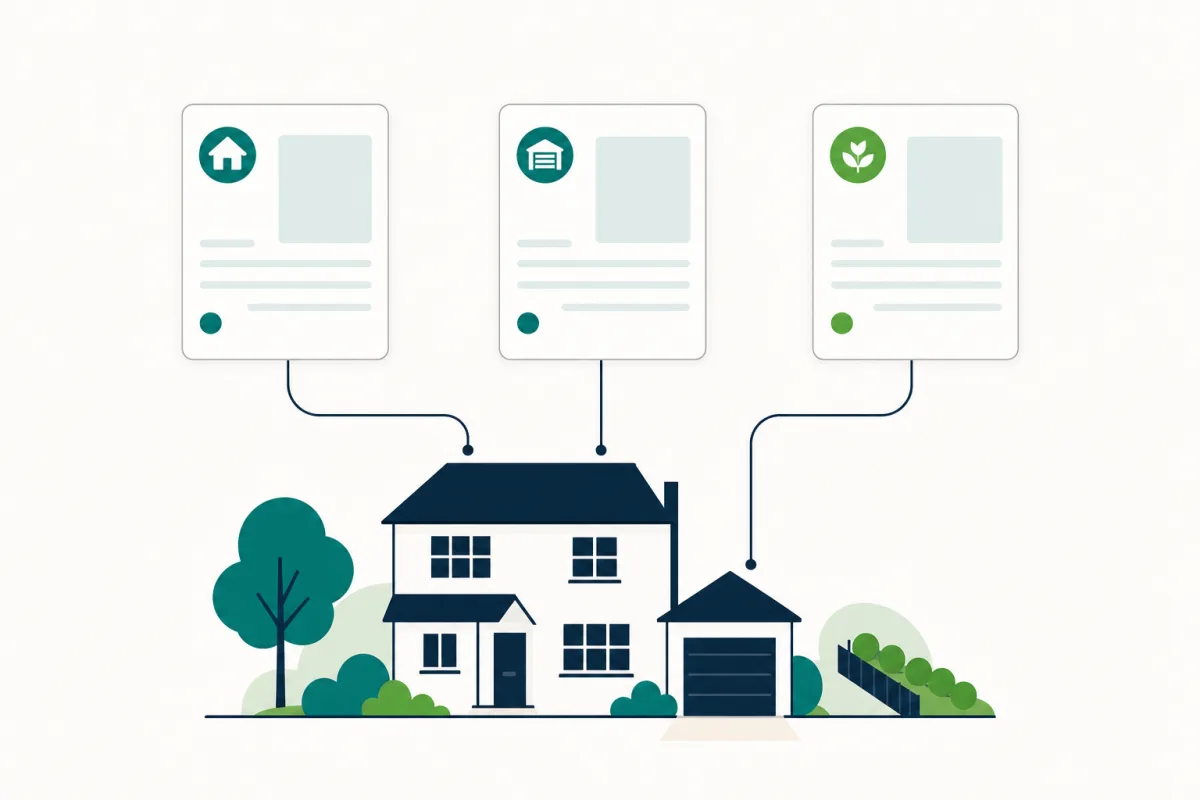
Title numbers attach to registered titles, not addresses, so one property can have several. The most common reason is a freehold and a leasehold title existing together, as with flats, but garages, parking spaces and gardens bought separately often have their own titles too. Each title has its own register and plan, so it matters which one you order.
Titles, not addresses
HM Land Registry registers titles — legal holdings of land — and gives each one a unique title number. Addresses are just how people describe where the land is. Because the two systems do not map one-to-one, a single address can sit across several titles, and a single title can cover many addresses (a whole apartment block, say, under one freehold title).
So "my house has two title numbers" is rarely a mistake in the register. It is usually an accurate record of how the land was assembled and held.
The common reasons
| Situation | Why separate titles exist | | --- | --- | | Freehold and leasehold pair | A lease creates a new legal estate, so a leasehold flat or house has its own title alongside the landlord's freehold title | | Flats | Every flat sold on a long lease gets its own leasehold title; the building keeps a single freehold title | | Garage or parking space | Often bought under a separate transfer or lease, sometimes in a different block, so registered under its own number | | Garden land bought later | A strip bought from a neighbour or developer after the original purchase is registered as a separate title | | Divided land | When part of a title is sold off, the part sold gets a new title number | | Merged or closed titles | Amalgamations, lease endings and freehold purchases can close numbers and create new ones |
Freehold and leasehold pairs
This is the case most people meet. With flats it is near-universal: the building has one freehold title, and each flat has a leasehold title created when its lease was granted. Some houses — common in parts of the North West, or on modern estates — are also sold leasehold, producing the same pairing. The two titles answer different questions: the leasehold title deals with the flat and its lease, the freehold with the building or estate.
Land added over time
Titles accumulate. A house bought in 1985, a slice of the neighbour's garden in 1999 and a parking space in 2010 can leave one home spread across three title numbers, each with its own register and plan. Nothing needs fixing, but anyone dealing with the property needs to remember all three exist.
Division and merger
Title numbers are not permanent. Sell half your garden and the buyer's half gets a new number; buy your freehold as a leaseholder and, if the titles are merged, the leasehold title can close. The current register for each title is always the up-to-date statement of what that number covers.
What it means when ordering documents
Because each title has its own register and title plan, "the documents for 12 Example Road" can genuinely mean two or three different sets. A few practical pointers:
- Decide what question you are answering — who owns the flat (leasehold title), who owns the building (freehold title), or what covers the garage (its own title).
- Expect one register and one plan per title, priced per title wherever you buy.
- If you are selling, make sure every relevant title is accounted for, including separately registered garages and garden strips.
When you order by address through our service, our team checks the address by hand before anything is retrieved. If more than one registered title could match — a freehold and leasehold pair, or extra titles for garage or garden land — we contact you to confirm which title you want rather than guessing. We are an independent service, and buying directly from HM Land Registry usually costs less; our fee covers that manual checking, retrieval, secure delivery and support.
This article is general information rather than legal advice. If multiple titles complicate a sale, purchase or dispute, a conveyancer can untangle the specifics.
Why Does a Property Have More Than One Title Number? — FAQs
Is it a problem that my house has two title numbers?
Usually not. It normally just reflects how the land was acquired — for example the house on one title and a strip of garden bought later on another. It does mean each title has its own register and plan, and a sale needs to deal with all of them.
Which title should I order for a leasehold flat?
It depends on the question. The leasehold title shows the flat's ownership and lease terms; the freehold title shows who owns the building or estate. To check who owns your flat, order the leasehold title. To investigate the freeholder or estate-wide covenants, order the freehold.
Can two titles be merged into one?
Sometimes. An owner of adjoining registered titles can apply for them to be amalgamated in some circumstances, and a leasehold title can close if the lease ends or the leaseholder acquires the freehold and merges the two. These are applications a conveyancer would handle.
How do I find out how many titles cover my property?
The registers themselves are the definitive answer. If you order by address through our service and our checks show more than one registered title could match, we contact you with the options before retrieving anything.
Does each title cost separately to obtain?
Yes. Each title has its own register and its own plan, so documents are ordered per title whether you buy through our service or directly from HM Land Registry.
Sources
- HM Land Registry: get information about property and land (GOV.UK)
- HM Land Registry practice guides (GOV.UK)
This guide is general information, not legal advice. Spotted an error? Email support@landregistry-docs.co.uk.